The Name Before the Design
- Why does naming a community matter more than designing an object for it?
- What is UNICEF's 'I am Team UNICEF' campaign and how was it built?
- How do you turn a one-time donation gift into a lasting brand identity?
- Why do objects lose their pull while names keep theirs?
The PromiseRing made a vow. The HopeRing gave that vow pride. For the third project, we made something simpler than either: a name. Team UNICEF.
Even after HopeRing wrapped, one question stayed with me. I had wanted to build a structure where ring-wearers could recognize each other, where each person's pride deepened through the presence of others. That sense never grew past a seed. One ring couldn't carry the full weight of "together." Starting the third project, for the first time I set the object question aside and asked something else first: what do we call these people.
The limits I kept hitting across PromiseRing and HopeRing pointed at the same spot. An object can make a moment. It can't make a relationship. And a relationship needs a name to hold it. It took two rounds of trial and error before I was sure of that.
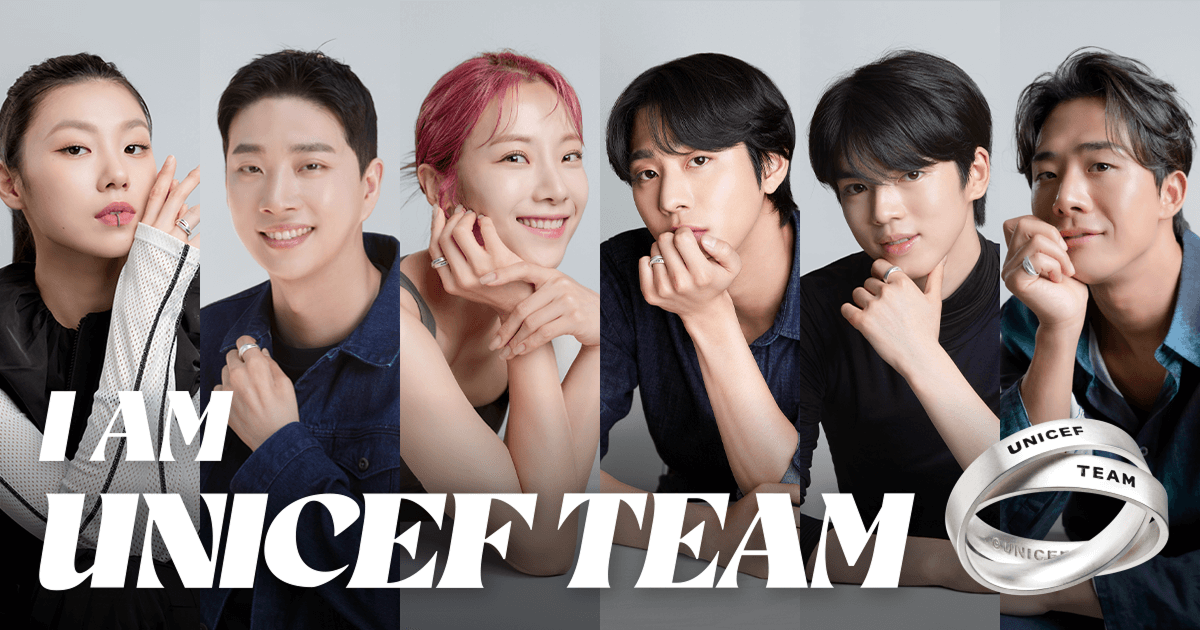
The answer, when it came, was almost plain: Team UNICEF. That's where the campaign "I am Team UNICEF" began. It started as a bracelet, but grew into a concept broad enough to hold the rings too — an object to carry the symbol, a direction pointed at the supporter rather than the cause, and, this time, a system that could hold that direction without leaning on a single object.
Even choosing the word "team" took weighing several candidates — club, community, family, crew. Each had its own warmth. We landed on team because it was the only word that held both role and responsibility at once. Family is warm but loose. Crew is casual but directionless. A team has a goal, positions, and a shared sense of winning and losing together. It matched exactly what we wanted: to stand supporters up as teammates, not to comfort them sentimentally.
Why the Name Matters
The limit I kept running into across PromiseRing and HopeRing was the same one. An object is good at switching on the spotlight of a first moment. It struggles to keep that light on months later. There's a ceiling to how much narrative weight a single ring can carry. So this time we reversed the order — decide the name and the values first, and treat the object as just one of several forms that value could take.
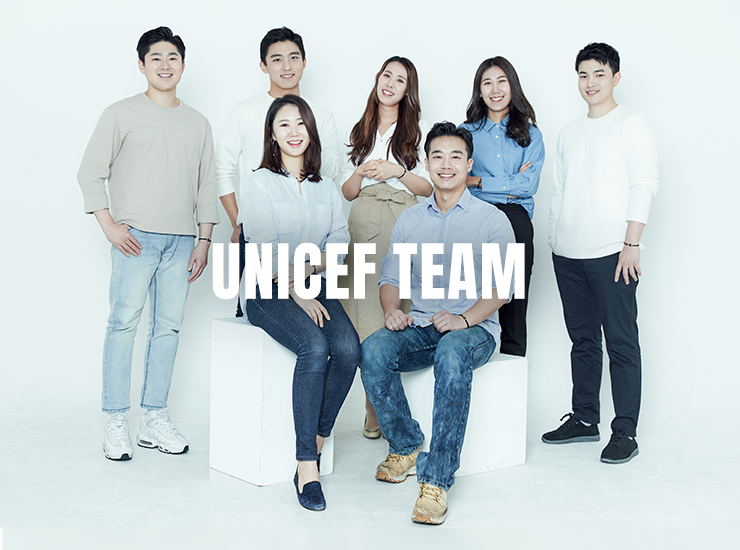
Every sentence describing Team UNICEF has one thing in common: it describes the supporter. Not one sentence is about UNICEF. Not one describes the ring or the bracelet. They're all about who the person joining this campaign is. That's copy that's hard to arrive at if you start from the object.
Looking back, this was a completely different way of asking the question than "why a safety pin" in PromiseRing, or "why a ring" in HopeRing. Both those projects started from an object and went looking for the meaning it could hold. This time we started from the meaning and went looking for a vessel to hold it.
From Ring to Bracelet: Widening the Grammar of Talismans
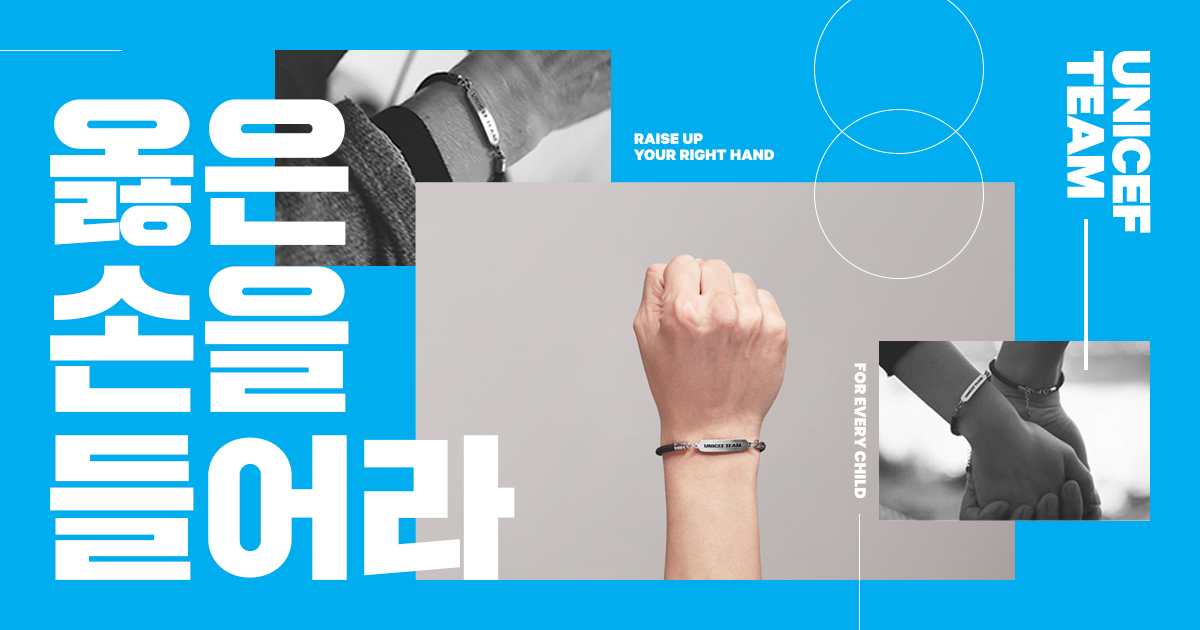
Widening the object from ring to bracelet was also inside the grammar of talismans the first two projects had already confirmed. Tying a thread or cord around the wrist to ward off misfortune and carry a wish is older than the ring, and far more people have worn one at some point in their lives. If the ring is a quiet vow resting on a single finger, the bracelet is a talisman that catches the eye every time the wrist moves — one you can push your sleeve back to show more openly.
A bracelet is also, comparatively, an accessory less bound by age or gender. It doesn't carry the same symbolic intensity or explosive resonance a ring does, but it could become an object that reaches further, and lasts longer.
I am UNICEF TEAM — the one team for childrenA ring makes a promise. A name makes a belonging.
A Campaign That Speaks Again After 100 Days
From PromiseRing I learned that handing someone a ring doesn't build the system to keep that promise alive afterward. From HopeRing I confirmed that pride's real test arrives months later, not on day one. This time, both lessons went straight into the design from the start. That's why, after 100 days, three additional charms arrive for the bracelet. We built into the campaign's skeleton a structure where the brand speaks again at 100 days — not just at the first spotlight.
We spent a long time deciding on 100. Too short, and it feels like an extension of the initial event. Too long, and interest cools completely before you get there. A hundred days sits close to the psychological threshold where a daily repetition hardens into a habit. Once you've worn a bracelet for 100 days, it's no longer something you received for joining a campaign — it's part of your life. Adding a charm at that point is a way of saying: we see that you kept this for 100 days.
The number also carries weight specific to Korean culture. A baby's hundred-day celebration, a couple's hundred-day anniversary — 100 days is already a conventional marker of "a small completion reached" in this culture. We weren't inventing a new rule; we were laying the campaign's timetable over a rhythm people already knew. Just as PromiseRing borrowed a familiar object — the safety pin — this one borrowed a familiar unit of time. A rhythm that needed no persuading was exactly why the device was accepted so naturally.
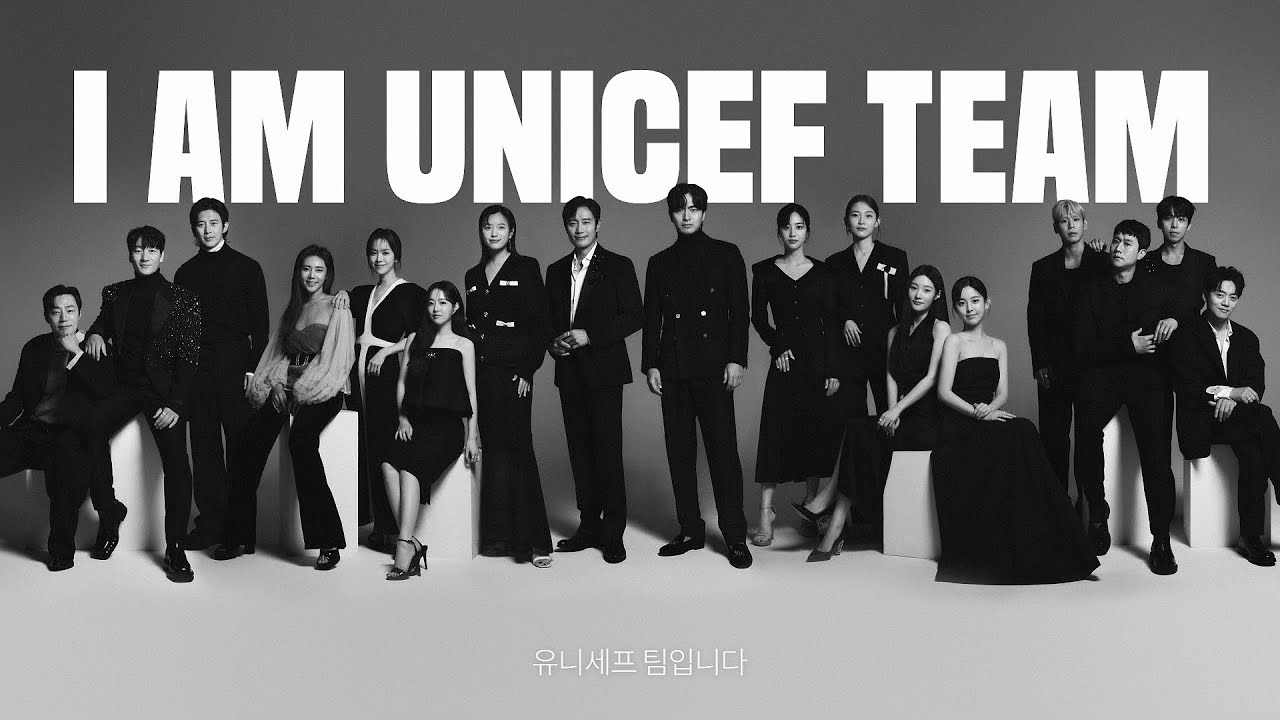
Appointing an ambassador followed the same logic. The moment a well-known figure says, "I am Team UNICEF too," that statement becomes an invitation — a way for an ordinary supporter to feel they already belong to the same team. In PromiseRing and HopeRing, each supporter had to build their own spotlight alone. This time, the ambassador stepped onto the stage first, proved the seat was worth having, and only then invited the supporter to take one beside them. Changing that single sequence lowered the barrier to entry considerably.
The criteria for choosing the ambassador also grew out of what the earlier two projects had taught us. We didn't need someone glamorous and famous above all else — we needed someone who fit the word team. An image of shining brighter together than alone. A track record of steady, genuine effort over time. Knowing that one person's casting would define the whole campaign's identity, this decision demanded discussion as careful as any we'd had over ring design.
Where Three Projects Complete One Idea
Place the three projects side by side and you see one idea complete itself in three stages. I'd now define good-goods this way: not merchandise consumed as a token of ethical shopping, but merchandise that puts the supporter themselves at the center, giving them a reason to relive pride and happiness every day. PromiseRing proved the first piece of that definition — that an object can carry a symbol precisely. HopeRing proved the second — that the symbol has to point at the supporter, not the cause, and that pride grows larger when it connects people to each other. Team UNICEF combined both, then finished the idea as a system that holds identity without depending on any single object.
The order matters because copying any one of the three projects alone will always give you a fraction of the whole. Copy only PromiseRing's safety-pin motif, and you get a campaign with a symbol but no protagonist. Copy only HopeRing's pride appeal, and the first spotlight turns on with no system to keep it lit. Copy only Team UNICEF's value language and ambassador, without understanding why that system was necessary — the two earlier experiences of learning that one object wasn't enough — and you're left copying the surface. What made this campaign work wasn't a single idea. It was standing on an understanding built in sequence, across three projects.
Whenever I've since heard that another organization is preparing something similar, I've made a point of asking which of the three stages they meant to start from. Most wanted to start from the third — the name and the value system — because it's the stage that looks most polished from the outside. But a name and a set of values go hollow without the failures and lessons of the first two stages underneath them. Six value statements written without any felt sense that an object can carry a symbol, without any conviction that pride beats guilt, will look plausible and still fail to reach anyone. I understand the pull to show the polished result first. I've also watched, more than once, that polish without a solid order beneath it doesn't hold.
Why a Name Outlasts an Object
What surprised me most once the campaign settled in was that people mentioning it brought up the sentence "I am Team UNICEF" before they mentioned the ring or bracelet's design. When supporters met each other online and introduced themselves, "I'm Team UNICEF" came out first. Which ring, which color — that was the conversation that followed. Watching these small, ordinary exchanges, I understood that the name had taken over the seat identity once belonged to the object. An object can keep updating — new color, new shape, season after season. A name, once it settles, doesn't shift so easily. Unlike the two earlier projects, which staked everything on the object, this one built a structure where belonging to Team UNICEF stays intact whether the object ages or a new one arrives.
This turned out to be the last condition for turning a merchandise campaign into a real brand asset. An object doesn't decay, but it does date. Today's ring can look tired tomorrow. A name doesn't date. Under the name Team UNICEF, whatever comes next — a ring, a bracelet, a necklace — continues naturally inside the same sense of belonging. What I finally understood, having gone through all three projects in order, is that the sturdiest form a good-goods campaign can take isn't the object at all. It's the name.
Once I'd confirmed that a name outlasts an object, the first question I ask on receiving any brief changed for good. Instead of "what are we going to make," I now ask, first, "what are we going to call these people." This project taught me, more clearly than the other two, that an object eventually gets replaced — but a name, once it takes hold, rarely disappears.
What Only Became Whole After Three Tries
The search trend across all three projects backs up this trajectory. Public search interest in donation merchandise fell from 49% in 2016 to 18% in 2024 — a signal that opening people's pride and their wallets with an object alone is getting harder every year. I don't want to read that decline as failure, though. It means an object by itself no longer holds anyone's attention for long, and that's exactly why the third project had to be finished with a name and a system. Through these three projects, we lived through something the wider market was only starting to feel: a shift from an age of objects to an age of systems, and we happened to feel it a little earlier than most.
**The distance between looking good and being good** is the question running underneath all three projects. PromiseRing, HopeRing, Team UNICEF — every one of them looked good in a single photograph. But being good was only ever proven by the choice repeated after the photo, when no one was watching. The first project taught symbol. The second taught protagonist and connection. The third taught the name and the system that keep that protagonist's seat held for a long time. None of these were things a single campaign could have taught.
Now that all three are finished, I don't think this order of learning can be taught in reverse. Starting with name and system and working backward toward object and pride might look more efficient on paper, but I doubt it would actually work. You can't properly name the thing meant to protect a symbol without first having lived through what a symbol is. You can't translate pride into a system without first failing to understand what pride actually is. Learning has a sequence, and a system built by skipping that sequence tends to look finished on the outside while staying empty inside.
If I'd stopped after PromiseRing, I would only know that an object can carry a symbol. If I'd stopped after HopeRing, I would know that pride is an engine stronger than guilt, and that it grows larger when it connects people — and nothing more. Only after the third project did I learn that keeping that engine running takes more than one object. It takes a system woven from name, values, ambassador, and the design of time itself. Two rings and one bracelet. It took making all three objects before I learned how to make the thing that remains without any object at all — a name.
Even now, telling these three projects as one story, something still catches me off guard. When I made PromiseRing, I had no idea it would become a trilogy. Each project was simply the best I could do with the brief in front of me at the time. But looking back, those efforts weren't accidentally connected. Each one was an honest attempt to answer the question the last one had left behind. Making one good campaign is hard. Carrying a lesson honestly into the next one is far harder, and it lasts far longer. I only understood that after all three were done.
I wrote these three pieces so this wouldn't stay a lesson only I carried. The person who learned, in PromiseRing, that an object can carry a symbol; the person who learned, in HopeRing, that pride is stronger than guilt; the person who learned, in Team UNICEF, that a name outlasts an object — all three were, in fact, the same person. I'm closing this series hoping someone else can start already knowing this order, without needing three rounds of trial and error to find it.
A ring is worn until it fades. A name is worn until it becomes who you are.